
Making Localized Course Voiceover Natural, Clear, and Easy to Follow
A translated course can read correctly and still sound difficult to follow. Effective narration makes the lesson's structure audible through phrasing, emphasis, and pacing.
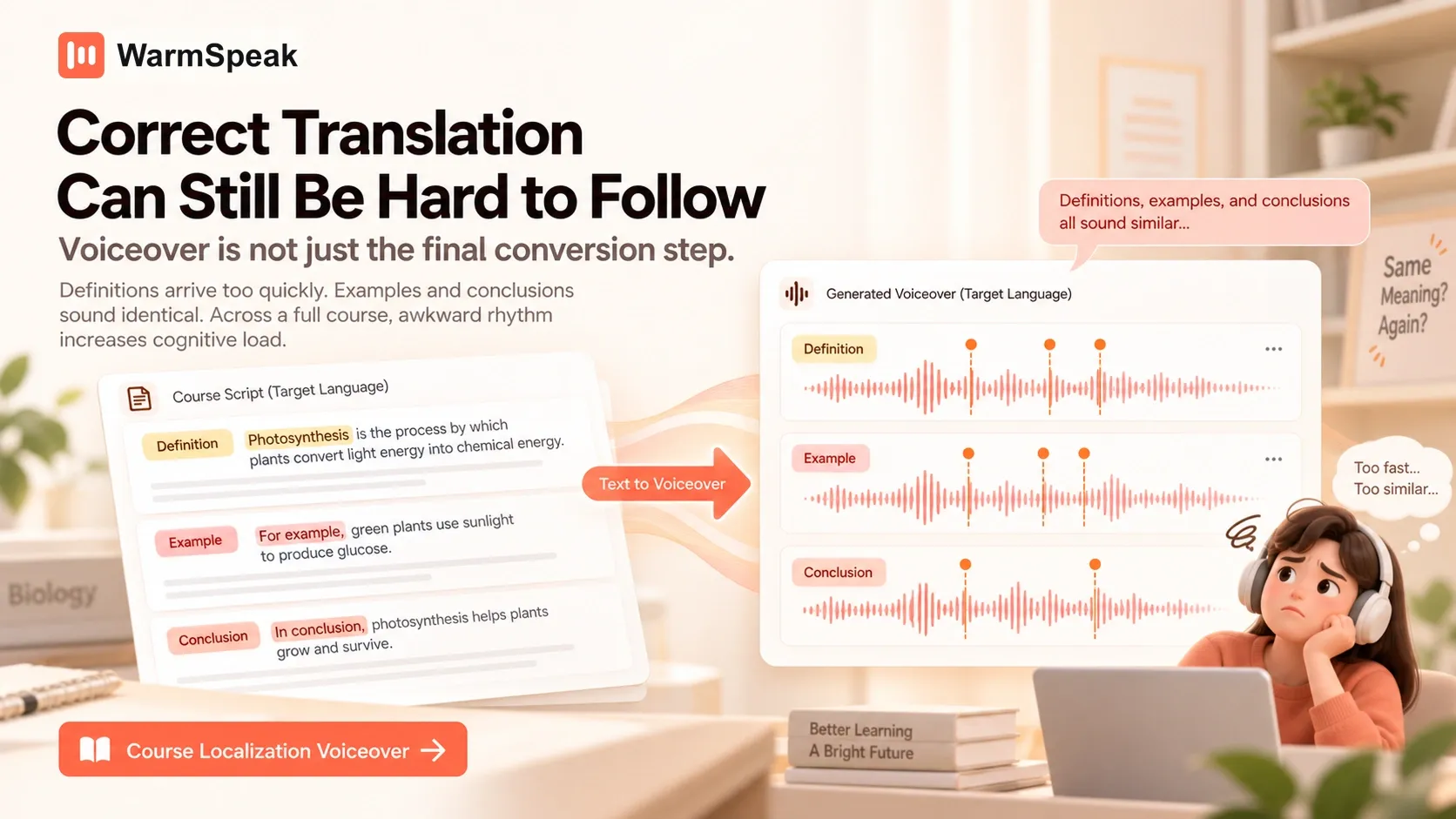
Once the terminology and grammar have been checked, turning a translated course into audio may seem straightforward. Listening often reveals a different problem: too much information in one sentence, emphasis on the wrong word, or definitions and examples delivered at exactly the same pace.
A brief awkward moment in a short video may be distracting. Mechanical delivery sustained through a lesson can add to the effort of understanding it. Course localization needs to consider how learners receive knowledge through sound.
Why a correct translation can still be hard to listen to
Readers can revisit a sentence and scan the structure of a paragraph. Listeners receive information in sequence. Missing a definition may make the example that follows harder to understand.
A sentence that works on the page may therefore need different phrasing for narration. Long modifiers, several conditions, and consecutive technical terms need audible pauses and emphasis to separate their roles.
Consider a passage that defines a concept, explains when it applies, and adds an exception. Equal emphasis across all three can hide which statement is the definition and which provides supporting detail.
Course narration should make the hierarchy of information easy to hear. Learners need to distinguish the core idea from its conditions and qualifications.
Questions, explanations, examples, and summaries need different delivery
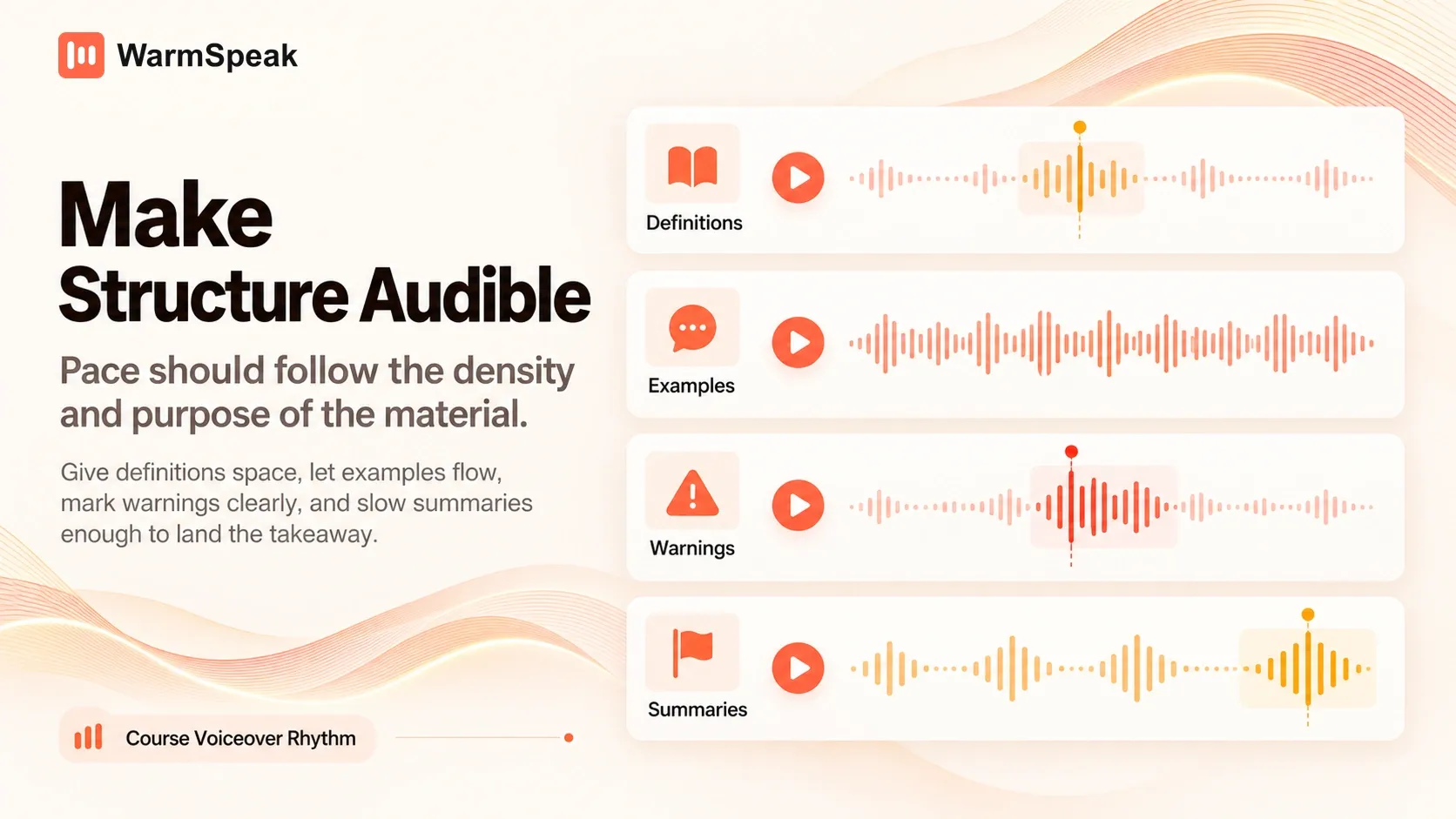
Educational narration does not need constant drama. It does need direction. A question may benefit from a pause, an explanation from steady clarity, an example from conversational delivery, and a summary from emphasis on the main conclusion.
Uniform speed, pitch, and sentence endings give listeners little help distinguishing those functions. Even accessible content can become tiring when its delivery offers no structure.
Slower is not automatically better. Excessively slow narration can leave ideas feeling disconnected. The useful pace depends on information density: allow room for a difficult definition, move more readily through repetition, and make the transition from example to conclusion clear.
Comfortable listening comes from pacing that supports the lesson and the audience's needs.
Keep pronunciation and teaching style consistent across lessons
A course is usually a sequence of lessons. Core terms recur, and abbreviations introduced in one chapter may appear without explanation later.
Changing the pronunciation can make learners wonder whether they have encountered a different concept. Inconsistent emphasis can also make recurring headings and explanations harder to recognize. Small variations accumulate across a long course.
Three forms of continuity matter:
• Terminology: Names, specialist terms, and abbreviations should retain their confirmed pronunciation.
• Voice and pace: The narrator should remain recognizable, with a broadly consistent delivery.
• Teaching structure: Definitions, examples, reminders, and summaries should have understandable differences in emphasis.
These requirements belong in production and review, reducing the need for the course team to repair inconsistencies file by file afterward.
WarmSpeak shapes narration around the course structure
WarmSpeak provides voiceover production for courses and training content. Voice selection establishes the direction; the course structure then guides pronunciation, pauses, emphasis, and sustained pacing.
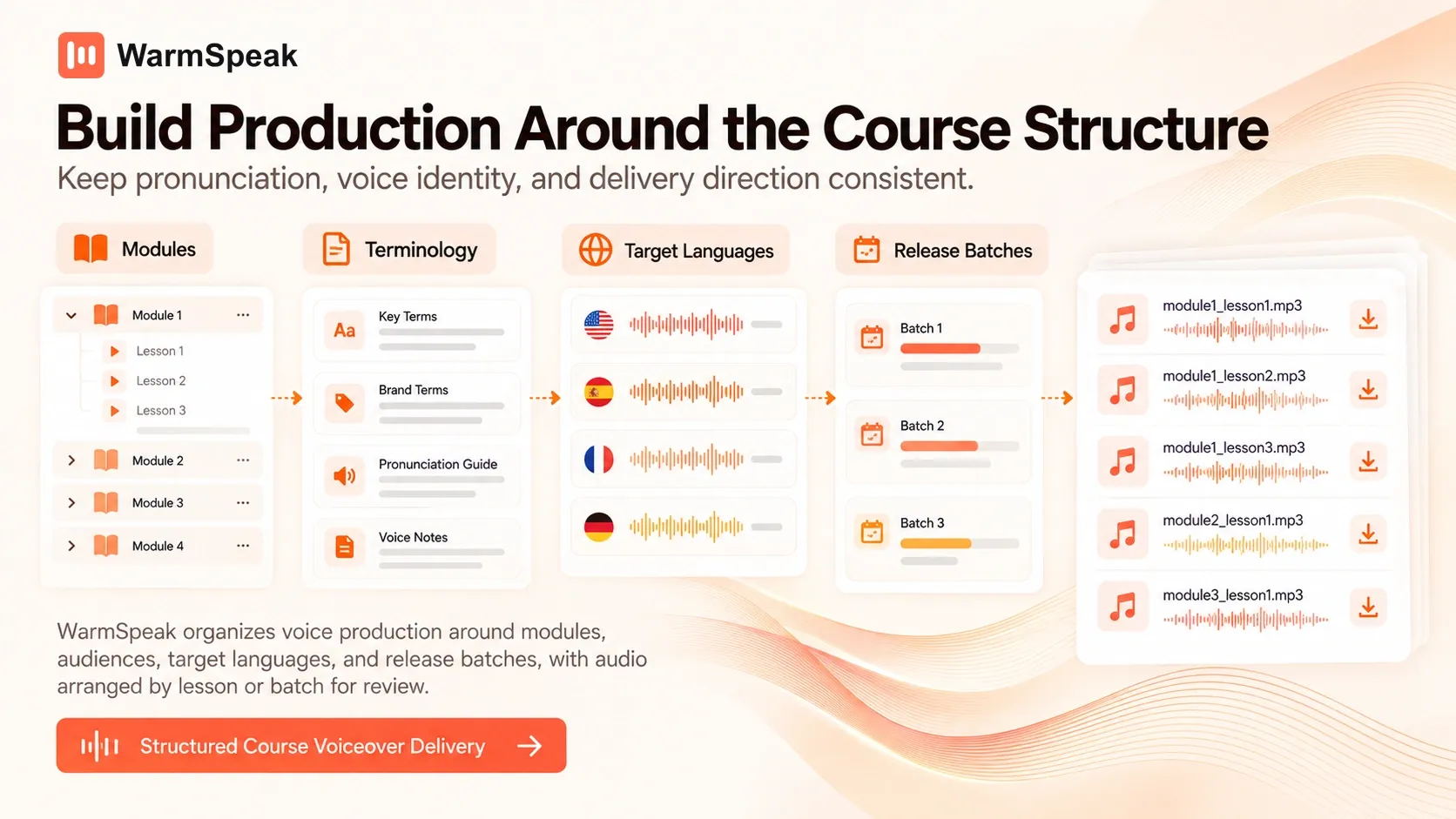
Projects can begin with the scripts, chapter structure, and intended use. WarmSpeak considers the target language and audience when establishing the narration style and handling terminology. Pauses and stress help distinguish definitions, examples, and conclusions.
For multi-lesson work, the voice and key terms need continuing attention so later chapters do not drift from the agreed approach. Audio is delivered according to the confirmed scope, organized by lesson or chapter to support checking of sequence and versions.
The purpose is to make the knowledge easier to follow through sound. Clear delivery reduces the extra effort learners spend adapting to the narration and lets them concentrate on the material.
Review whether the voice teaches clearly, as well as how it sounds
A pleasing voice is only part of the assessment. Listen for whether the opening establishes the lesson's question, definitions make the key concept audible, terms stay consistent, examples differ clearly from conclusions, and the pace remains steady over several minutes.
Frequent rewinding deserves a closer look. Consider the subject's difficulty and the learners' prior knowledge, then examine script organization, teaching pace, and vocal delivery. For lessons built around diagrams or demonstrations, review the audio with the picture to check whether it supplies the explanation the learner needs.
Natural, clear narration can reduce the effort of following the voice itself. For a course or training localization project, provide WarmSpeak with the scripts, course structure, and intended use to confirm the voice direction and delivery scope.
Learn more about WarmSpeak
Visit the website: WarmSpeak official website
Submit your project: Contact us