
TTS Is Fast. Production-Ready Voiceover Is a Different Job.
Fast audio generation does not guarantee production-ready voiceover; voice direction, pronunciation, pacing, system review, and organized delivery determine whether the final audio can actually be used.
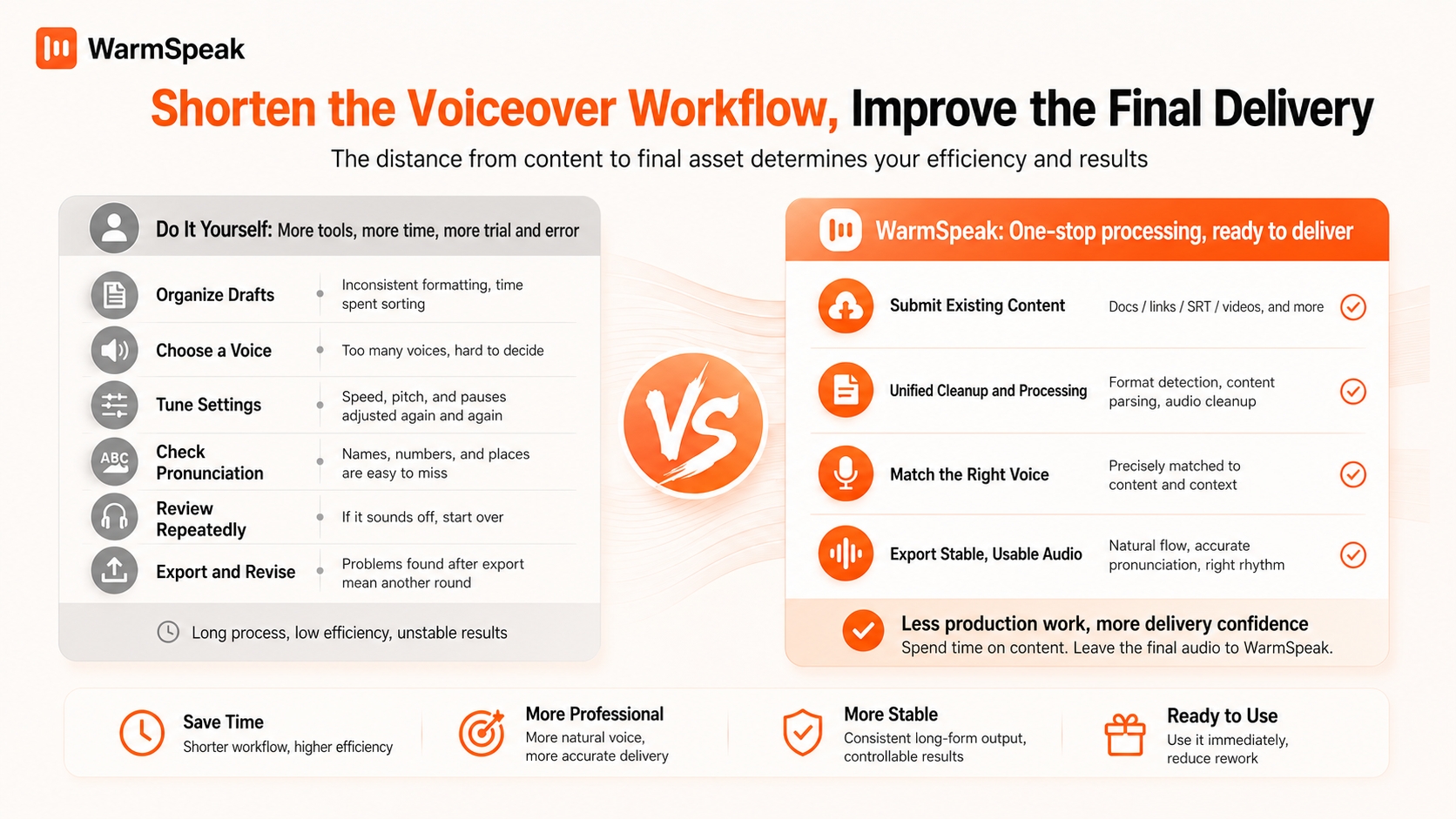
Generating audio takes minutes. Choosing, directing, reviewing, and delivering audio that fits a real project takes a production process.
Text-to-speech tools have made voice generation remarkably accessible. Paste in a script, select a voice, and an audio file can be ready within minutes.
For a quick internal demo or a small one-off task, that may be all a team needs.
Commercial content asks for something different. The voice has to fit the brand and format. Names and specialist terms have to be pronounced correctly. Pauses, emphasis, pace, and emotion have to support the message. The file has to be reviewed, organized, and ready for editing or publication.
TTS has shortened the generation step. It has not removed the production decisions around it.
For many content teams, those decisions—not the generate button—are now the part consuming the most time.
A usable voiceover begins with the right voice direction
A voice can sound natural in isolation and still be wrong for the content.
A software tutorial may need calm, precise delivery. A brand film may need warmth without sounding theatrical. A short-form video may need energy while leaving enough space for fast visual edits. Long-form learning content needs a pace listeners can follow without fatigue.
Choosing a voice therefore involves more than preference. The team has to consider the audience, format, message, language, and intended use.
In a self-service workflow, someone on the content team must audition options, compare versions, and decide what “right” sounds like. If the direction is unclear, the team can spend time refining an audio file that was never a good fit for the project in the first place.
A managed voiceover process begins by translating the brief into a practical voice direction before full production starts.
Pronunciation and pacing need systematic quality checks
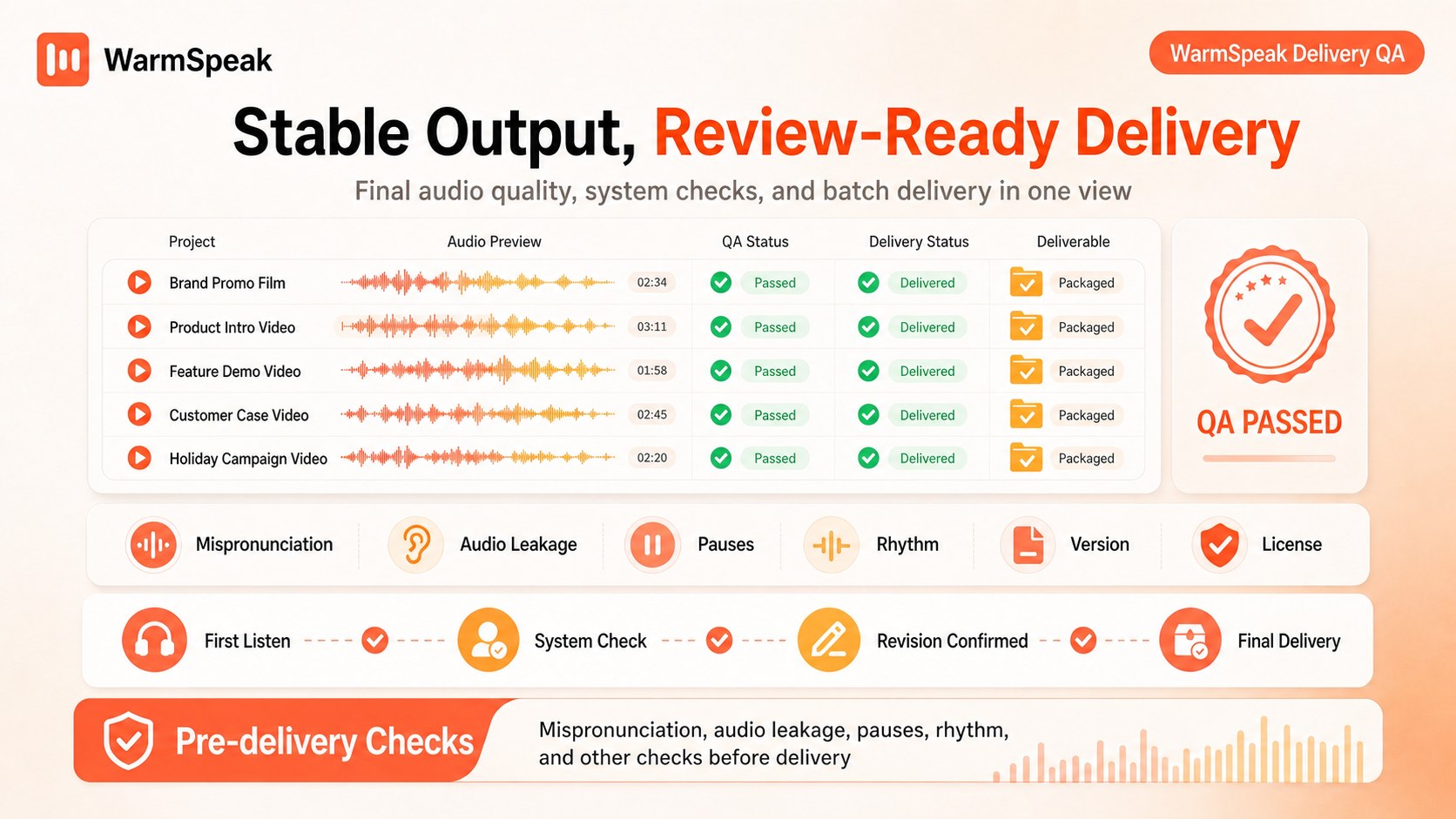
Most voiceover problems are not dramatic failures. They are small issues that make finished content feel less polished:
• Pronunciation: a product name is spoken inconsistently
• Word stress: a technical term receives the wrong emphasis
• Pauses: ideas that should remain connected are split apart
• Pacing: a sentence moves too quickly for the visuals
• Emphasis: the wrong word carries the message
• Long-form delivery: the narration turns flat after several minutes
A generation tool can produce another version quickly, but the new result still needs to be checked against pronunciation, pacing, emphasis, and delivery requirements.
That review becomes more demanding when the content includes names, numbers, abbreviations, technical language, or long passages. A line that looks simple on the page may need different punctuation, phrasing, or timing to sound natural when spoken.
Voiceover production therefore needs a structured quality-control process. The script is not merely converted into sound; the output is checked for the way it will actually be heard.
Batch content turns individual choices into a consistency problem
Producing one clip with a self-service tool may be straightforward. Producing a continuing series means repeating the full cycle: select, generate, listen, revise, export, name, and organize.
As volume grows, teams also need consistency across the batch. The same brand series should not move between noticeably different speaking styles. Recurring terms should keep the same pronunciation. Files need to be delivered in a structure that editors and producers can use without sorting through multiple near-final versions.
This affects several common workflows:
• Short-form video: narration needs to support fast pacing and frequent publishing
• Courses and training: terminology, clarity, and comfortable long-form listening matter throughout the material
• Brand and product videos: the voice needs to fit the intended brand impression and visual tone
• Advertising content: delivery has to support the message and timing of the creative
• Documentary, podcast, and audiobook-style narration: longer scripts require stable pacing and sustained listening quality
At this stage, the team is no longer looking for access to voice generation. It is looking for a reliable way to receive finished audio across an entire content workload.
WarmSpeak turns scripts into quality-checked, organized voiceover deliverables
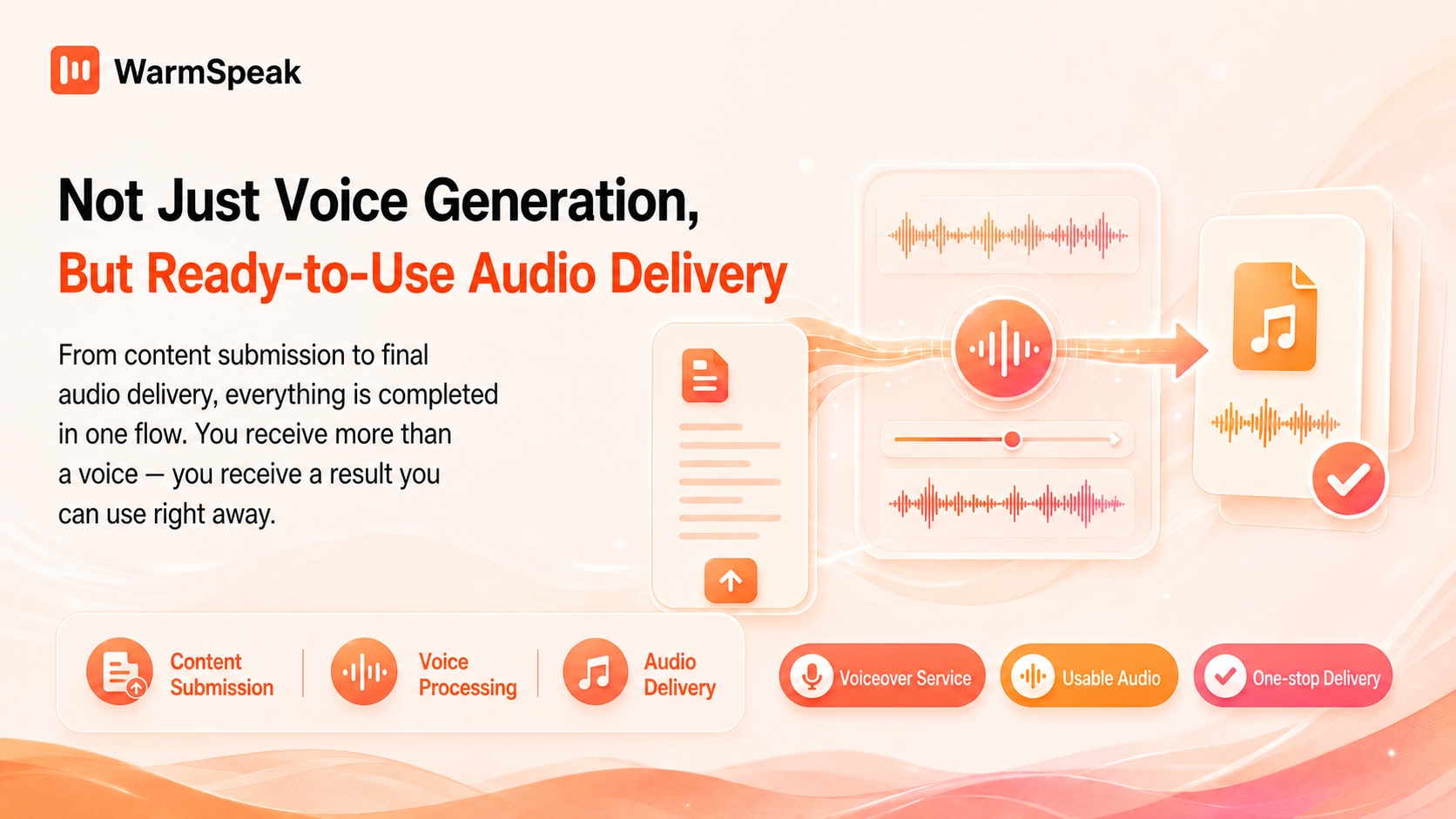
WarmSpeak is a professional voiceover service for teams that want the production handled, rather than another tool to operate.
Clients can submit scripts, documents, subtitle files, or video materials and explain the use case, target language, preferred voice direction, and delivery requirements. WarmSpeak then manages the relevant production work for single-narrator content: voice matching, pronunciation, pauses, speed, tone, rhythm, emotional delivery, systematic quality checks, and file organization.
For long-form or batch projects, voice style, recurring terminology, and delivery structure can be managed consistently across the project. Standard audio delivery can include MP3, WAV, or audio tracks, while subtitle or final-video requirements are confirmed according to the project scope.
The result is a different division of work. The content team defines what the project needs. WarmSpeak takes responsibility for producing and checking the voiceover files before delivery.
That allows editors, marketers, course teams, and producers to spend less time operating a TTS workflow and more time on the content the voiceover is meant to support.
Learn more about WarmSpeak
Visit the website: https://warmspeak.com/
Submit your voiceover project: https://warmspeak.com/contact/